
Case study · Three-store convenience group
Less excess ordering.
A clearer next move.
A nightly order engine built around the shop’s own ePOS data. Recommendations tested against what actually sold.
The measured result · One store
Lower cost-weighted
ordering error
Less ordering error,
valued at buying cost
Priced, gradeable
order lines compared
Completed delivery windows from 30 June to 30 August 2026, at one store. Less excess ordering drove the improvement; under-ordering error increased. These figures measure recommendation quality, not cash savings.
How we measured it
Both the owner’s order and the engine’s recommendation were scored against the same target: observed sales, less stock already held or on order, floored at zero. Excess and shortfall units were valued at recorded buying cost.
| Error | Owner’s orders | Engine recommendations |
|---|---|---|
| Excess ordering | £35,429.40 | £15,551.12 |
| Under-ordering | £1,222.23 | £3,557.77 |
| Total | £36,651.63 | £19,108.89 |
Total cost-weighted ordering error fell from £36,651.63 to £19,108.89: a £17,542.74 reduction, rounded to £17,543 above.
The comparison covers 2,812 priced, gradeable lines: 83.7% of 3,360 graded lines at one store. Evidence runs through 9 September 2026. It does not represent every product or all three shops.
Missing costs and sold-out windows with unknown demand are excluded from the relevant score and counted separately. The comparison does not establish that recommendations were followed, or show realised savings, higher profit or reduced write-offs.
One owner.
Three daily decisions.
Fast sellers could run short while slower lines tied up cash. The owner needed a consistent view across the shops, whoever was on shift.
What needs ordering?
The engine checks forecast demand, stock held and incoming orders. Recommendations account for delivery cycles, supplier case sizes and shelf capacity. The operator reviews the order and makes the final call.
What could move instead?
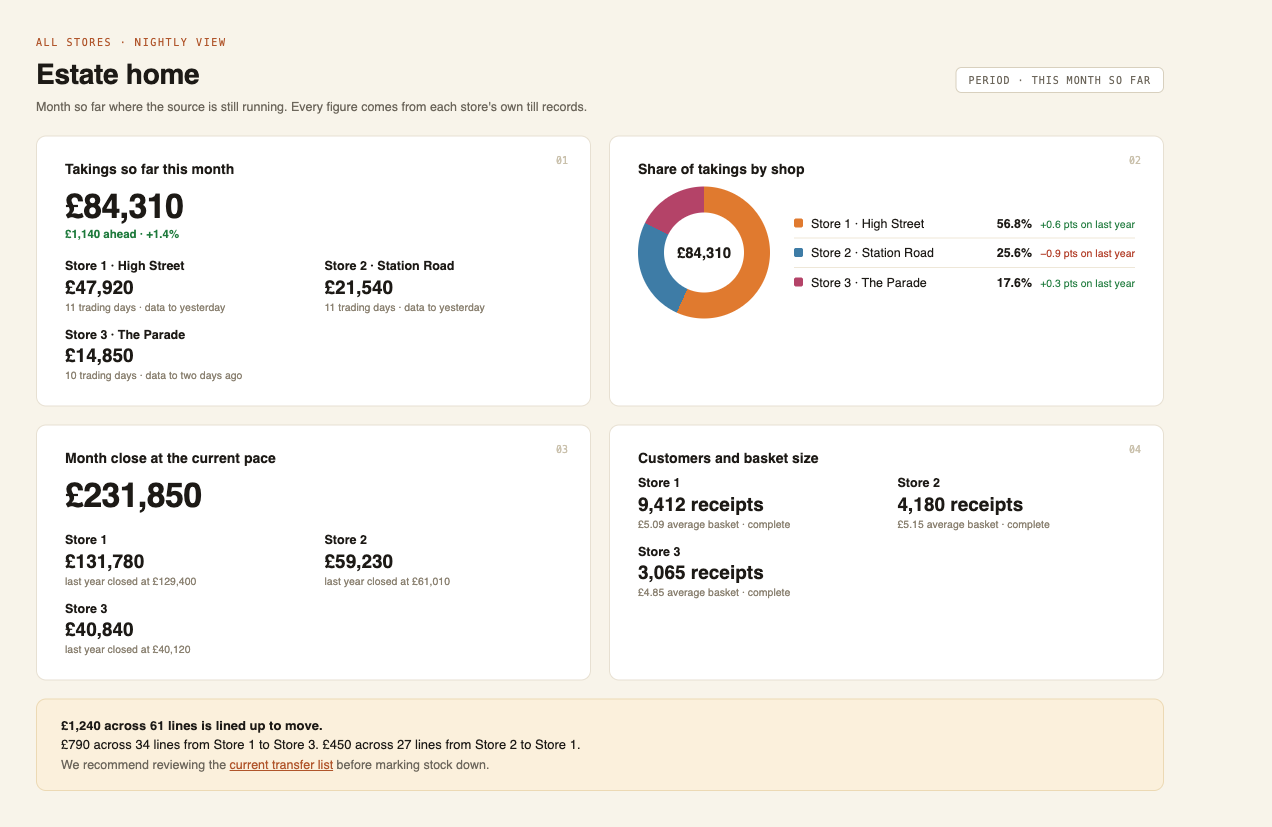
Find stock sitting in one shop that could sell in another. Transfer recommendations show the proposed source and destination where product matches, stock and demand evidence support the move. Staff check availability and carry out approved transfers.
Which shop needs attention?
A private reporting portal brings the configured shops together. The owner can compare performance and review price checks alongside stock decisions. Orders, transfers and price changes remain under operator control.
Start with
your next decision.
See what your shop’s data can support.